
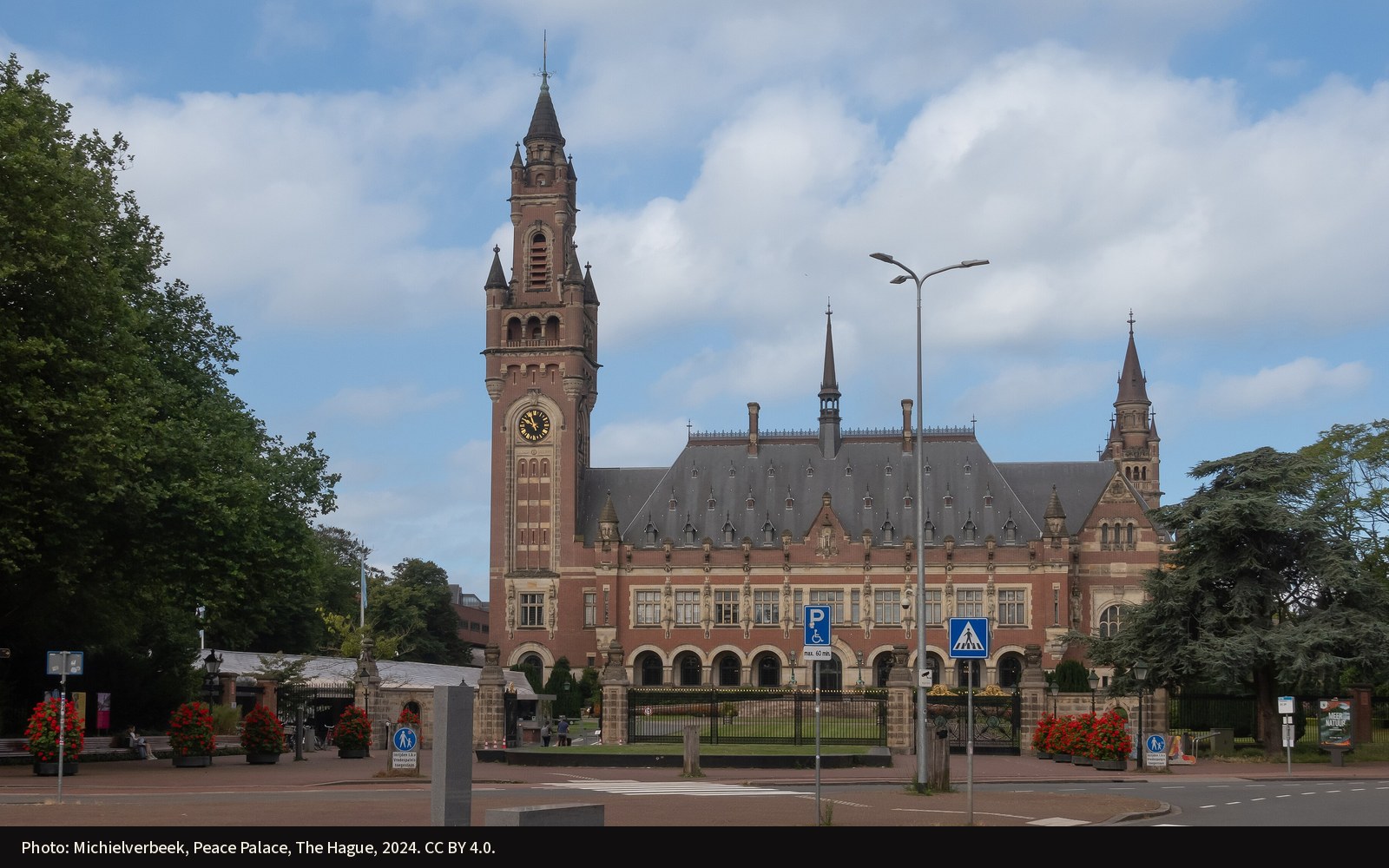
The International Court of Justice ruled Thursday that Myanmar committed genocide against its Rohingya minority during a 2016-17 military campaign in northern Rakhine state, the Associated Press, BBC News and The Guardian reported.
Court President Yuji Iwasawa said the 15-judge panel found, by a vote of 9-6, that Myanmar “has committed genocide against the Rohingya group in northern Rakhine state, in violation of its obligations under the Genocide Convention,” the AP reported. BBC News said it was the first time an international court has found a state guilty of committing genocide. The Guardian reported that the court had never before found a state responsible for genocide.
Reading the judgment, Iwasawa said the scale and nature of Myanmar’s actions went “well beyond what would be required to punish the population” and that “the only reasonable inference” was an intention to destroy a substantial part of the Rohingya population of northern Rakhine state, BBC News reported. He also said Myanmar had engaged in “extensive destruction of evidence” by burning bodies and bulldozing sites, and that it had failed to investigate and punish those responsible. By 11 votes to four, the court found Myanmar violated its obligation to punish genocide, BBC News reported. The court said it was “not fully convinced” that Facebook posts by the military amounted to direct and public incitement to genocide.
Myanmar had denied committing genocide and said its forces were responding to attacks by armed groups, BBC News reported. The court rejected that defense, the AP said.
The court found Myanmar has an obligation to make reparations but left the amount and form of compensation to a later stage of the proceedings, BBC News reported. Myanmar is to report within two years on how it will provide restitution, Iwasawa said. Human Rights Watch said the ruling is final and cannot be appealed. The court has no power to enforce its rulings, though its decisions are binding, The Guardian reported.
The case was brought in 2019 by Gambia with the backing of the Organization of Islamic Cooperation, Human Rights Watch said. It concerned the responsibility of the state, not criminal charges against individuals. The 2017 crackdown forced more than 700,000 Rohingya to flee to neighboring Bangladesh, BBC News reported, and The Guardian said more than 1 million Rohingya still live in camps there.
Maria Elena Vignoli, senior international justice counsel at Human Rights Watch, called the ruling “long-awaited recognition of the suffering the Rohingya have endured” and urged Myanmar to comply. At a refugee camp in Bangladesh, men jumped to their feet as the verdict was read on a small screen, BBC News reported.